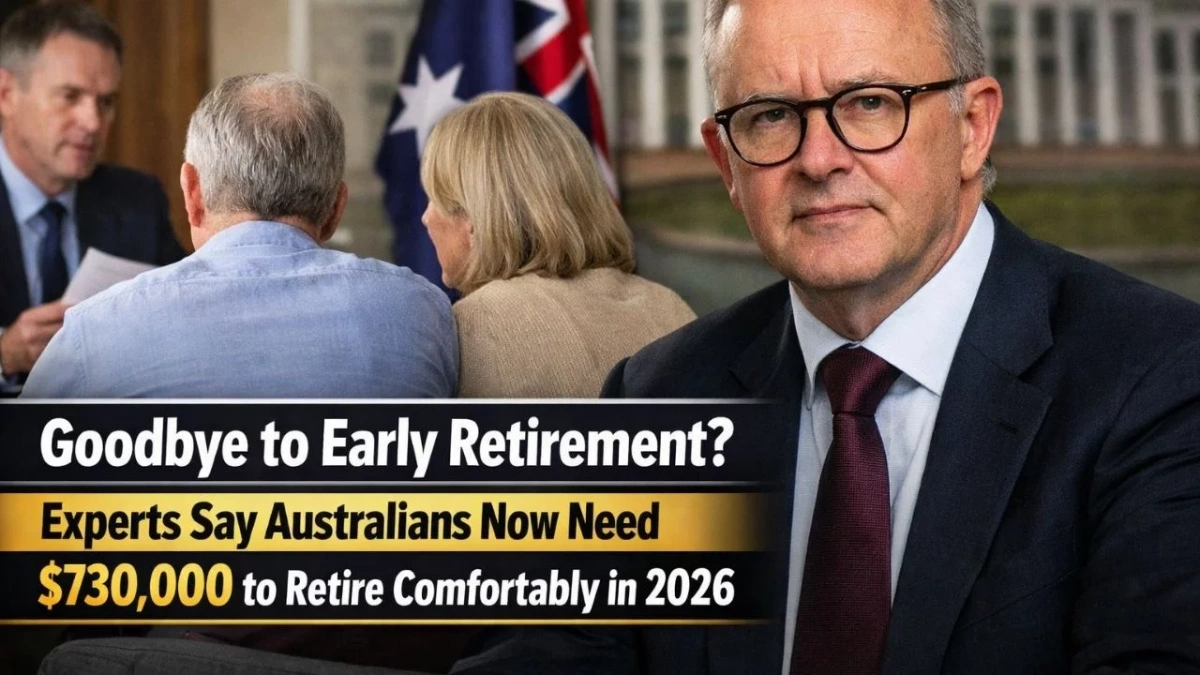
The dream of early retirement in Australia is facing a reality check in 2026. Financial experts are now warning that Australians may need at least $730,000 in savings to retire comfortably, raising serious concerns for those planning to exit the workforce early. With rising living costs, longer life expectancy, and changes in retirement policies overseen by the Australian Government and monitored through the Australian Taxation Office, the retirement landscape is becoming more challenging than ever.
Why $730,000 Is the New Retirement Benchmark
The $730,000 figure is emerging as a baseline for a comfortable retirement lifestyle, covering essential expenses such as housing, food, healthcare, and leisure activities. This estimate reflects current economic conditions, including inflation and the rising cost of services. It also accounts for the fact that retirees are living longer, meaning their savings must last for more years. For many Australians, this new benchmark represents a significant increase compared to previous expectations.
What Has Changed in 2026
Several factors have contributed to the shift in retirement expectations. Inflation has increased the cost of everyday living, making it more expensive to maintain a comfortable lifestyle after retirement. Healthcare costs have also risen, adding further pressure on savings. Superannuation rules have evolved, with increased focus on sustainability and stricter compliance measures. These changes can affect how much individuals can contribute and withdraw from their retirement funds. All of these factors combined have pushed the required savings higher.
Estimated Retirement Income From $730,000
Below is a general example of how $730,000 in retirement savings could translate into annual income.
| Scenario | Estimated Annual Income |
|---|---|
| Conservative Drawdown | $28,000 – $32,000 |
| Moderate Strategy | $32,000 – $42,000 |
| Higher Withdrawal Rate | $42,000 – $52,000 |
| With Pension Support | Higher combined income possible |
These figures are estimates and can vary based on investment performance, lifestyle choices, and lifespan.
Why Early Retirement Is Becoming Harder
Early retirement requires not only a large savings pool but also the ability to sustain income for a longer period. Retiring earlier means relying on savings for more years, increasing the risk of running out of money. Without sufficient funds, individuals may need to return to work or significantly reduce their lifestyle.
Additionally, access to government support such as pensions may be delayed, placing further reliance on personal savings. These challenges are making early retirement less accessible for many Australians.
Who Is Most Affected by This Shift
Younger workers and middle-income earners are among those most affected. Individuals who started saving later or have lower super balances may find it difficult to reach the $730,000 target. Those planning to retire early will need even higher savings to maintain financial security. Retirees already in the system may also need to reassess their financial plans due to rising costs.
Common Mistakes That Could Delay Retirement
Many Australians fall short of retirement goals due to avoidable mistakes. Not contributing enough to superannuation is one of the biggest issues. Ignoring inflation and future expenses can also lead to underestimating required savings. Poor investment decisions or withdrawing funds early can reduce long-term growth. Failing to adjust plans as rules and economic conditions change is another common problem.
What You Should Do Right Now
Taking action early is essential to meet the new retirement benchmark. Review your current savings and superannuation balance. Consider increasing contributions where possible to build your retirement fund faster. Seeking professional financial advice can help you create a strategy tailored to your goals. Regularly monitoring your progress and adjusting your plan can improve your chances of achieving a comfortable retirement.
Future Outlook for Retirement in Australia
The retirement landscape is expected to continue evolving in the coming years. Economic conditions, policy changes, and demographic trends will all play a role in shaping future requirements. Australians will need to stay informed and adapt their strategies to keep up with these changes.
Conclusion
The idea of early retirement is becoming more challenging in 2026, with $730,000 now seen as a key benchmark for a comfortable lifestyle. While this figure may seem daunting, careful planning and proactive financial management can help Australians work toward their retirement goals. Understanding the changing landscape and taking timely action will be crucial for securing a stable financial future.
Disclaimer: This article is for informational purposes only and does not constitute financial advice. Individual circumstances may vary.