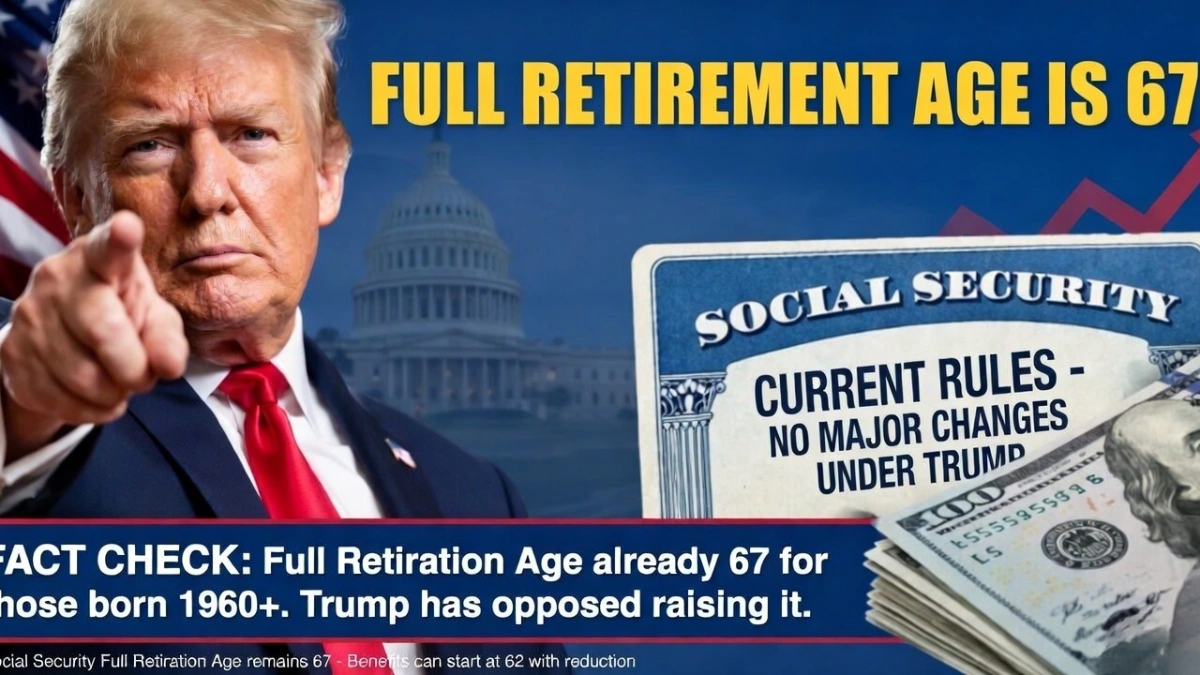
The idea of retiring at 67 has long been considered a standard milestone in the United States, especially when it comes to claiming Social Security benefits. But now, a major shift is quietly unfolding that could redefine retirement planning for millions of Americans. With evolving policies, rising life expectancy, and financial pressure on the system, the “new age” of Social Security is no longer just a prediction, it is becoming reality.
Why Retirement at 67 Is No Longer a Fixed Rule
For decades, 67 has been seen as the “full retirement age” for many Americans under the Social Security system. However, changing economic conditions and demographic trends are forcing policymakers to rethink this benchmark. The Social Security Administration has been under increasing pressure due to a growing number of retirees and a shrinking workforce contributing to the system. As people live longer and healthcare improves, retirees are collecting benefits for more years than ever before.
This imbalance is pushing discussions toward gradually increasing the retirement age beyond 67, or introducing flexible retirement models that depend on income, health, and work history.
What the “New Age” of Social Security Means
The concept of a fixed retirement age is being replaced by a more dynamic and personalized system. Instead of one universal age, future retirees may have multiple options depending on their situation.
Some key changes being discussed include: Early retirement with reduced benefits still remains an option, but the reduction may become steeper in future policies Full retirement age could gradually increase to 68, 69, or even 70 over time Delayed retirement credits may become more attractive, encouraging people to work longer Income-based adjustments may impact how much benefit individuals receive These changes are not just theoretical. They are part of ongoing discussions in Washington aimed at keeping Social Security sustainable for future generations.
How This Impacts Current and Future Retirees
For people nearing retirement, these potential changes can significantly affect financial planning. If the retirement age increases, individuals may need to work longer or rely more on personal savings. Younger generations, especially those in their 20s and 30s, may experience the biggest impact. For them, retiring at 67 might not even be an option anymore.
Instead, retirement planning will likely focus more on flexibility. People may choose partial retirement, freelance work, or phased retirement strategies rather than completely stopping work at a specific age.
Key Differences Between Old and New Retirement Approach
| Factor | Traditional System | New Emerging System |
|---|---|---|
| Retirement Age | Fixed at 67 | Flexible and increasing |
| Benefit Structure | Standard formula | Personalized and income-based |
| Work After Retirement | Optional | Increasingly common |
| Longevity Consideration | Limited | Strongly factored in |
| Financial Planning | Short-term focus | Long-term, adaptive strategy |
Why the Change Is Happening Now
The shift is not sudden. It has been building over years due to multiple factors. The U.S. population is aging rapidly, with more people entering retirement than ever before. At the same time, birth rates are declining, which means fewer workers are contributing to Social Security.
Economic uncertainty and inflation have also added pressure on retirement systems. Policymakers are now prioritizing long-term sustainability over short-term convenience.
What You Should Do Right Now
If you are planning for retirement, this is the time to rethink your strategy. Relying solely on Social Security may not be enough in the future. Diversifying income sources, increasing savings, and staying informed about policy updates will be crucial. Understanding how benefit calculations may change can help you make smarter decisions early. The new retirement landscape is not about fear, it is about preparation and adaptability.
Conclusion
The era of retiring comfortably at 67 with predictable Social Security benefits is slowly fading. A new, more flexible system is emerging, one that reflects modern realities like longer lifespans and economic pressures. While these changes may seem uncertain, they also offer an opportunity to rethink retirement in a more personalized and sustainable way. Those who adapt early will be better positioned to secure their financial future.
Disclaimer: This article is for informational purposes only and does not constitute financial or legal advice.