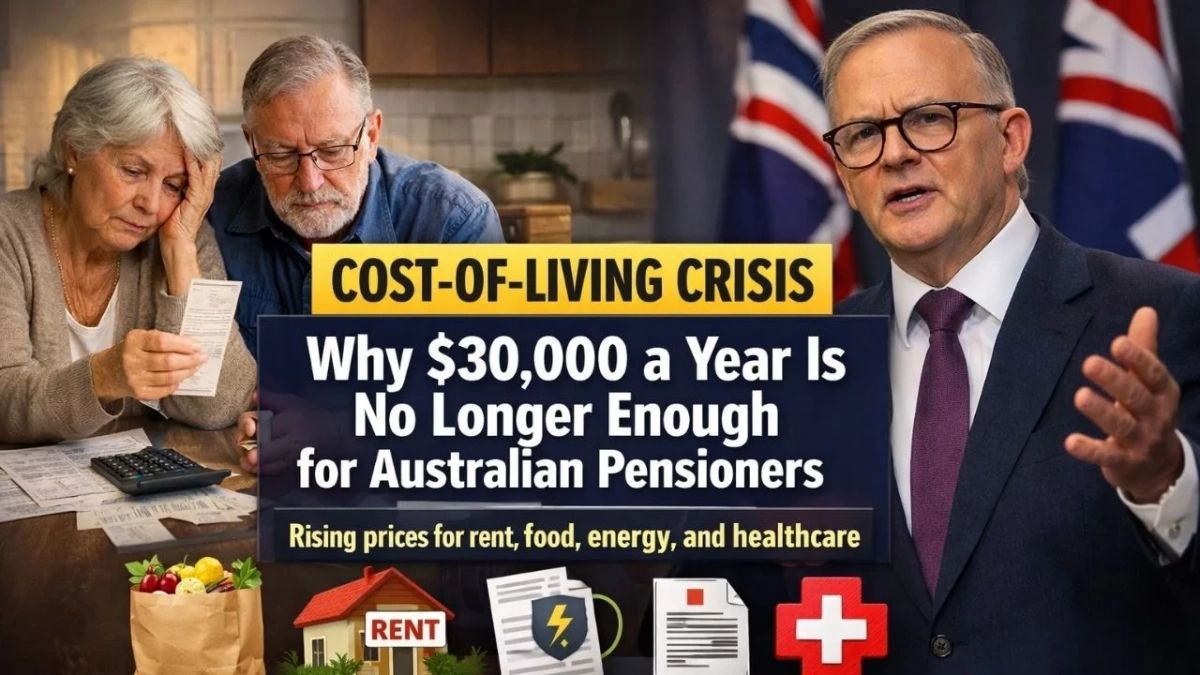
Australia’s cost-of-living crisis is hitting pensioners harder than ever in 2026, with many retirees now saying that $30,000 a year is no longer enough to maintain even a basic standard of living. Rising prices across housing, food, healthcare, and utilities are forcing seniors to rethink their budgets and financial plans. For those relying on payments from Centrelink and support managed by Services Australia, the pressure is becoming increasingly difficult to manage. What was once considered a modest but workable annual income is now falling short of real-world expenses.
Why $30,000 Is No Longer Enough in 2026
The biggest reason behind this shift is inflation. Over the past few years, the cost of essential goods and services has risen significantly, eroding the purchasing power of fixed incomes. Housing costs, particularly rent, have surged in major cities, while grocery prices and utility bills have also increased. Healthcare expenses, including medications and services, continue to rise as well. For pensioners living on a fixed income, these changes mean that the same $30,000 now covers far less than it did before.
Breakdown of Typical Annual Expenses
Below is an example of how a $30,000 annual budget may be distributed for a single pensioner.
| Expense Category | Estimated Annual Cost |
|---|---|
| Housing (Rent/Utilities) | $12,000 – $15,000 |
| Food & Groceries | $6,000 – $8,000 |
| Healthcare | $2,500 – $4,000 |
| Transport | $2,000 – $3,000 |
| Other Essentials | $3,000 – $5,000 |
| Total Expenses | $25,500 – $35,000+ |
This table shows how quickly expenses can exceed a $30,000 income, leaving little room for savings or unexpected costs.
Impact of Rising Housing Costs
Housing is one of the biggest pressures for pensioners. Rent increases in cities like Sydney and Melbourne have made it difficult for retirees to secure affordable accommodation. Even homeowners are not immune, as rising utility bills and maintenance costs add to financial strain. Housing alone can consume nearly half of a pensioner’s annual income.
Healthcare Costs Continue to Climb
Healthcare is another major expense that continues to rise. While Australia provides support through public healthcare and programs, many pensioners still face out-of-pocket costs for medications, specialist visits, and treatments. Chronic conditions, which are more common among older individuals, further increase healthcare spending. Even small increases in medical costs can significantly impact limited budgets.
Everyday Expenses Are Adding Up
Basic necessities such as food, transport, and utilities are becoming more expensive. Grocery bills have increased due to supply chain issues and inflation. Energy costs have also risen, putting additional pressure on households. Transport costs, including fuel and public transport fares, continue to climb. These everyday expenses may seem small individually but collectively create a significant financial burden.
Why Pension Increases Are Not Keeping Up
Although pension payments are adjusted periodically, many retirees feel that increases are not keeping pace with real-world costs. Indexation helps maintain purchasing power to some extent, but rapid price increases can outpace these adjustments. This gap between income and expenses is a key reason why $30,000 is no longer sufficient.
How Pensioners Are Coping
Many retirees are being forced to make difficult financial decisions. Some are cutting back on non-essential spending, while others are delaying healthcare or reducing social activities. In some cases, pensioners are seeking part-time work or relying on family support to make ends meet. These coping strategies highlight the growing financial pressure faced by seniors.
What Can Be Done to Improve the Situation
Addressing the cost-of-living crisis requires a combination of policy changes and personal financial planning. Government measures such as increased pension payments, additional subsidies, and cost-of-living support can provide relief. On an individual level, careful budgeting, accessing available benefits, and seeking financial advice can help manage expenses. Long-term solutions will depend on economic conditions and policy decisions.
Conclusion
The reality for many Australian pensioners in 2026 is clear: $30,000 a year is no longer enough to maintain a comfortable or even basic standard of living. Rising costs across all essential categories are creating significant financial challenges.
Understanding these pressures and exploring available support options can help retirees navigate this difficult period more effectively.
Disclaimer: This article is for informational purposes only and does not constitute financial advice. Individual circumstances may vary.